Sail freight is a premium. Here is what it buys.
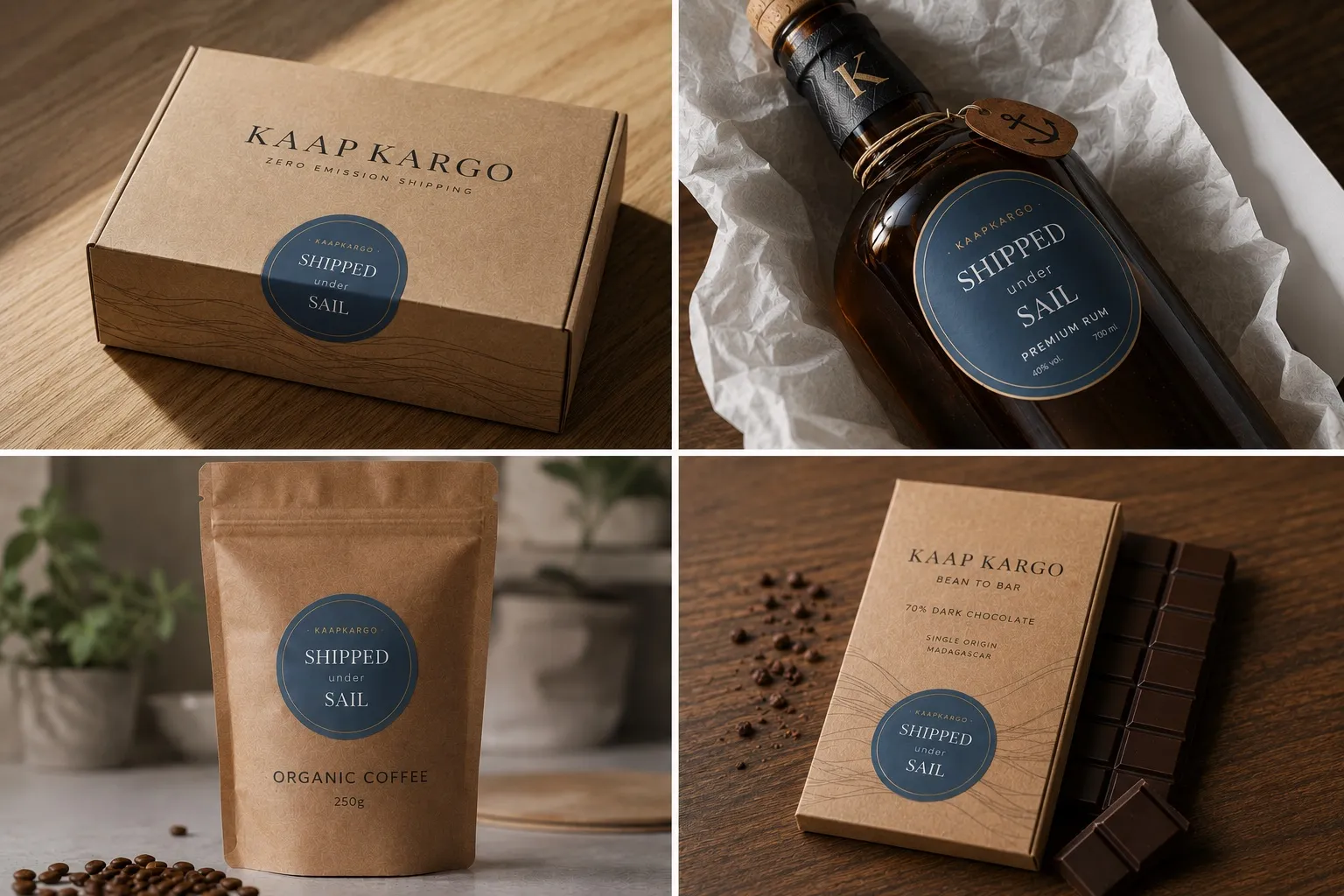
Wind-powered shipping costs more than a container slot, and returns more: transport with a fraction of the carbon, a badge for your packaging, and a voyage your marketing can be built on.
Tell us your product, volumes and destination. We match it to a route and voyage window.
Cargo is confirmed for a crossing. Ship, crew and cargo are covered by full P&I insurance.
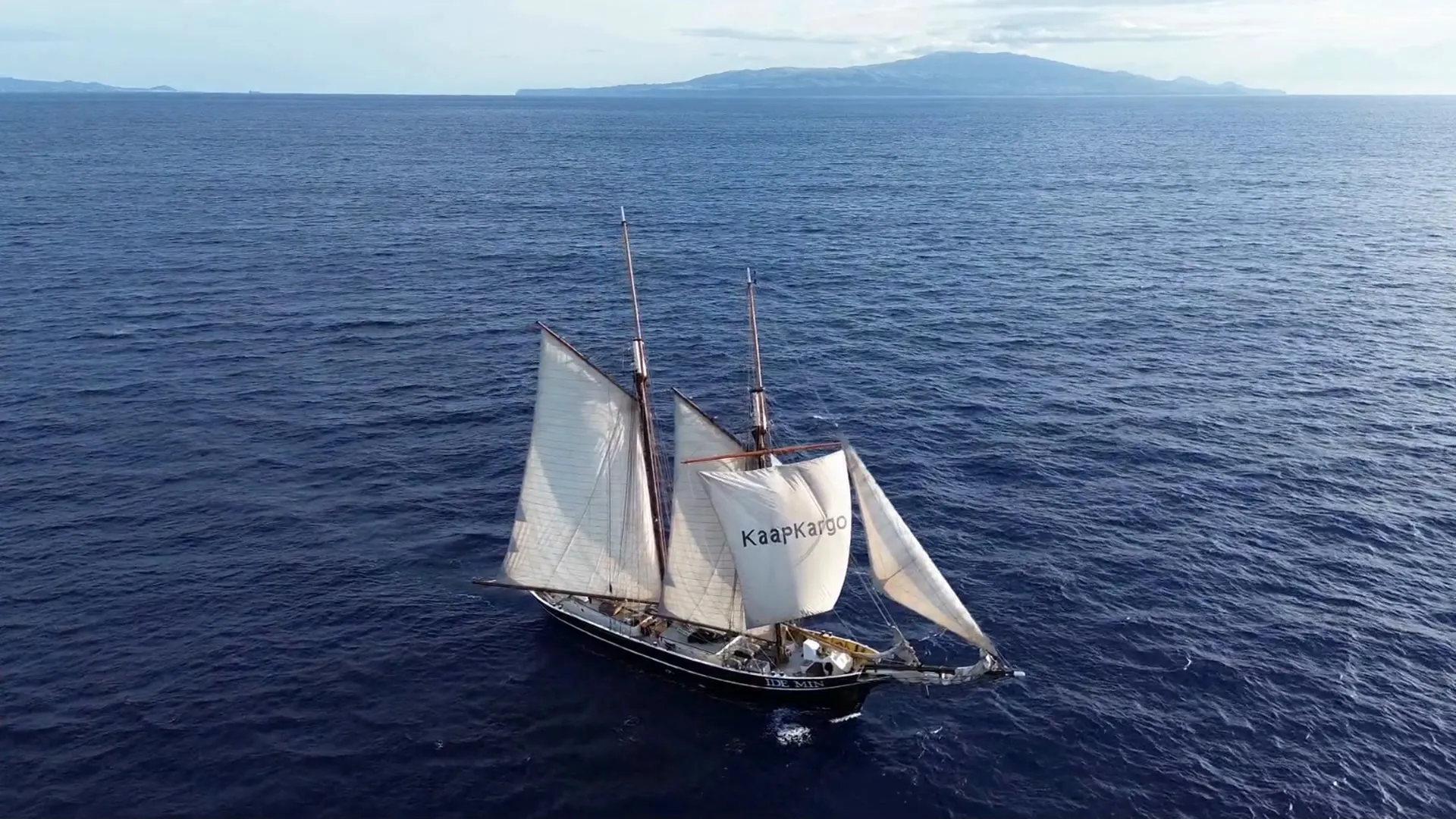
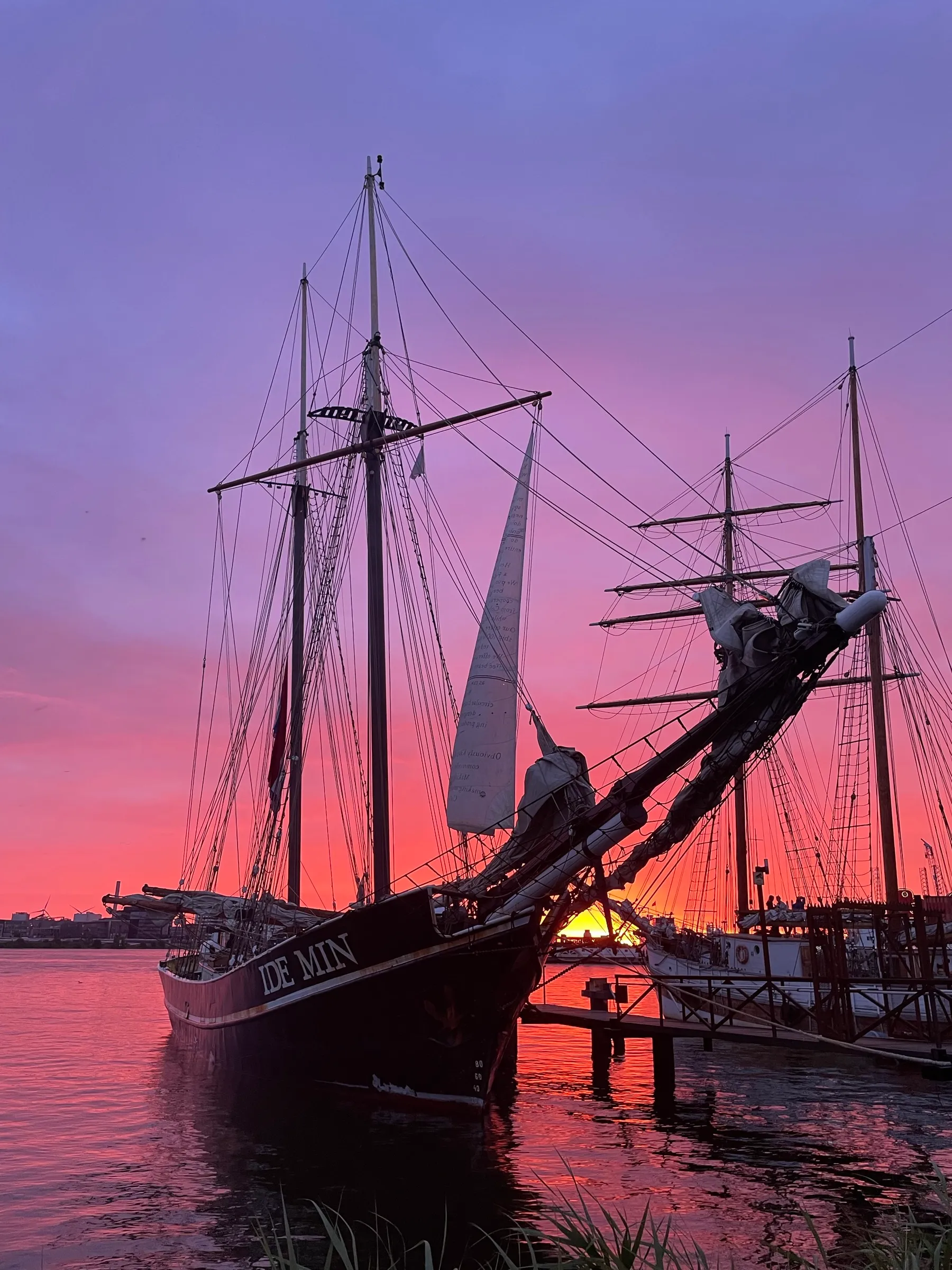
Ide Min crosses under sail, taking 3 weeks to 5 months depending on route and weather.
Badge license, voyage photos and documentation land with your cargo, ready for your marketing.
What travels well under sail
Sail freight suits goods that keep, that carry their value in quality rather than speed, and that are sold to people who want to know where things come from. The four below are examples, the cargoes we carry most often.
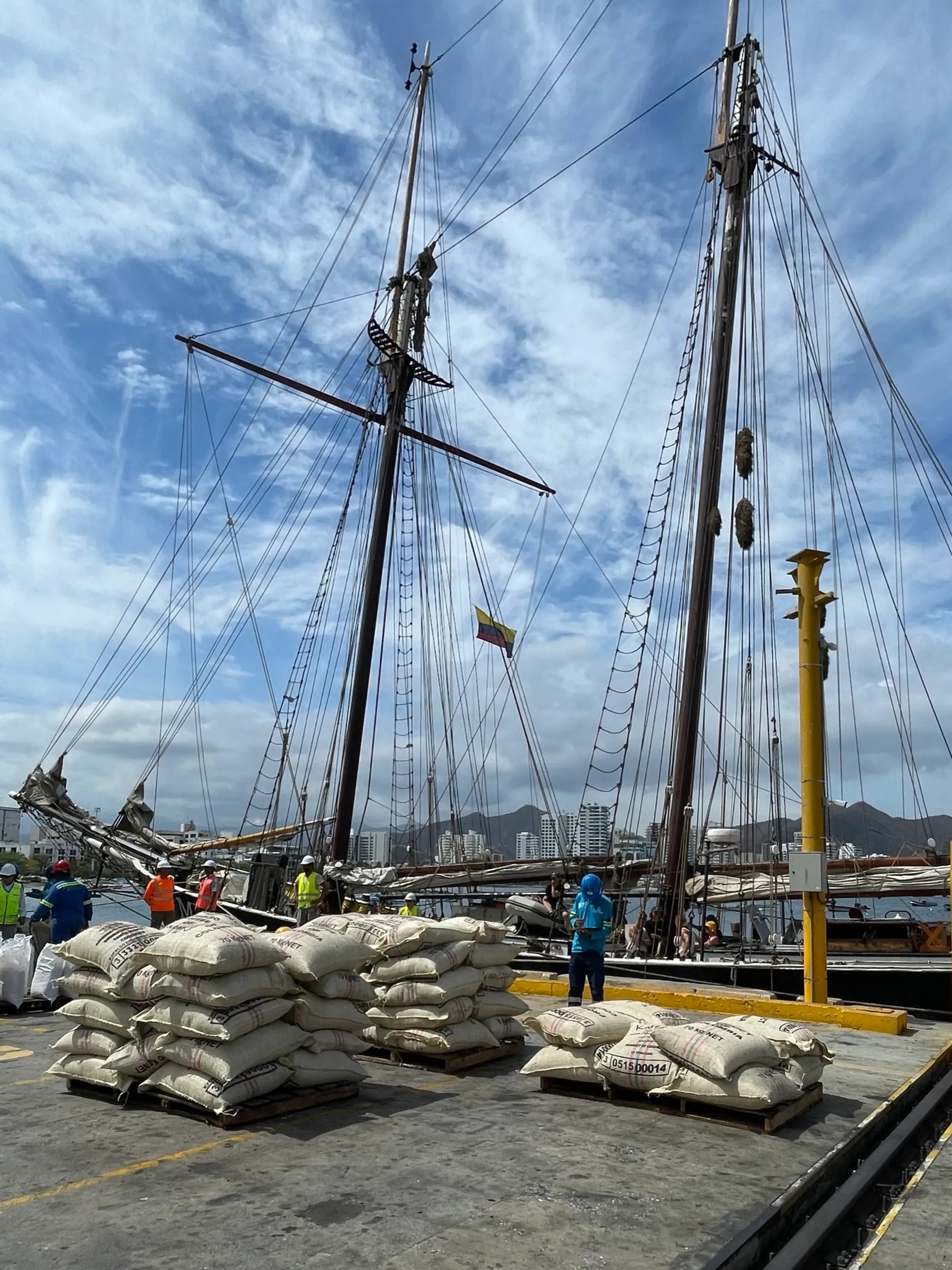
Beans from the Dominican Republic and Colombia, loaded where they grow and landed in Amsterdam. Bean to bar makers want to know the farm and the fermentation; importers buying at volume want that same traceability without giving up tonnage.
Green, unroasted beans cross in bales and are roasted after they land in Europe, so the beans leave the roastery freshly roasted. Speciality buyers sell on origin now and ask first about altitude, varietal and process, and the crossing is the part of that story most buyers still cannot account for.
Casks that cross under sail get what the trade calls dynamic ageing, or ocean ageing. Oak is charred or lightly toasted before the rum goes in, and the constant motion of the passage keeps working the spirit against that wood, drawing out vanilla, spice and colour along with whatever the cask held before it. Shifting temperature and humidity between the tropics and the North Sea do the rest. A crossing does to a cask what months in a still warehouse cannot.
Unrefined whole cane sugar, boiled down and set into blocks at the mill instead of being stripped white in a refinery, so it keeps the molasses and the taste of the cane it grew from. Bakers and chocolate makers buy it for exactly that. It is among the oldest cargoes on this route: dense, dry and hard-wearing, and it asks nothing of a hold except that it stays dry.
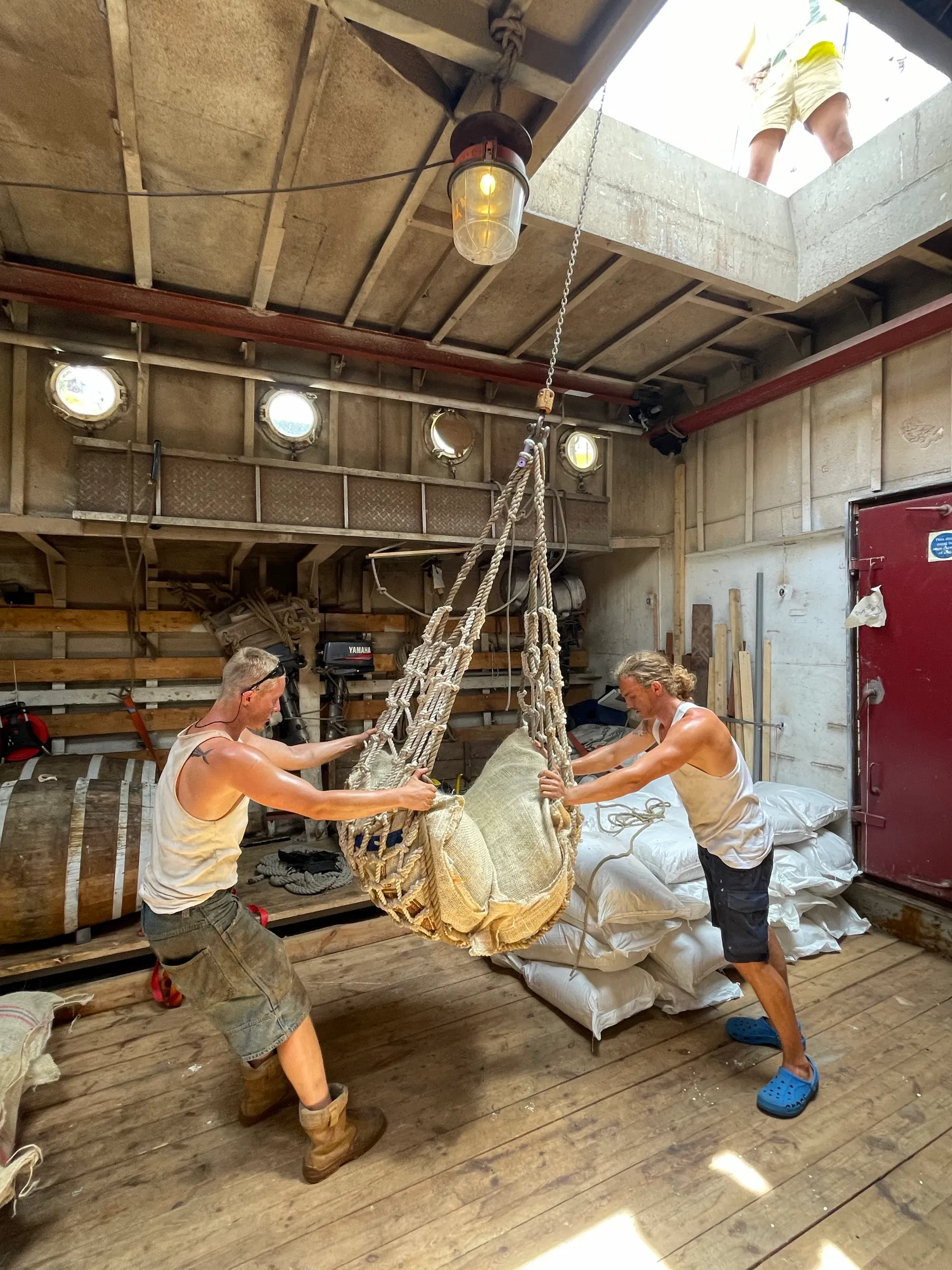
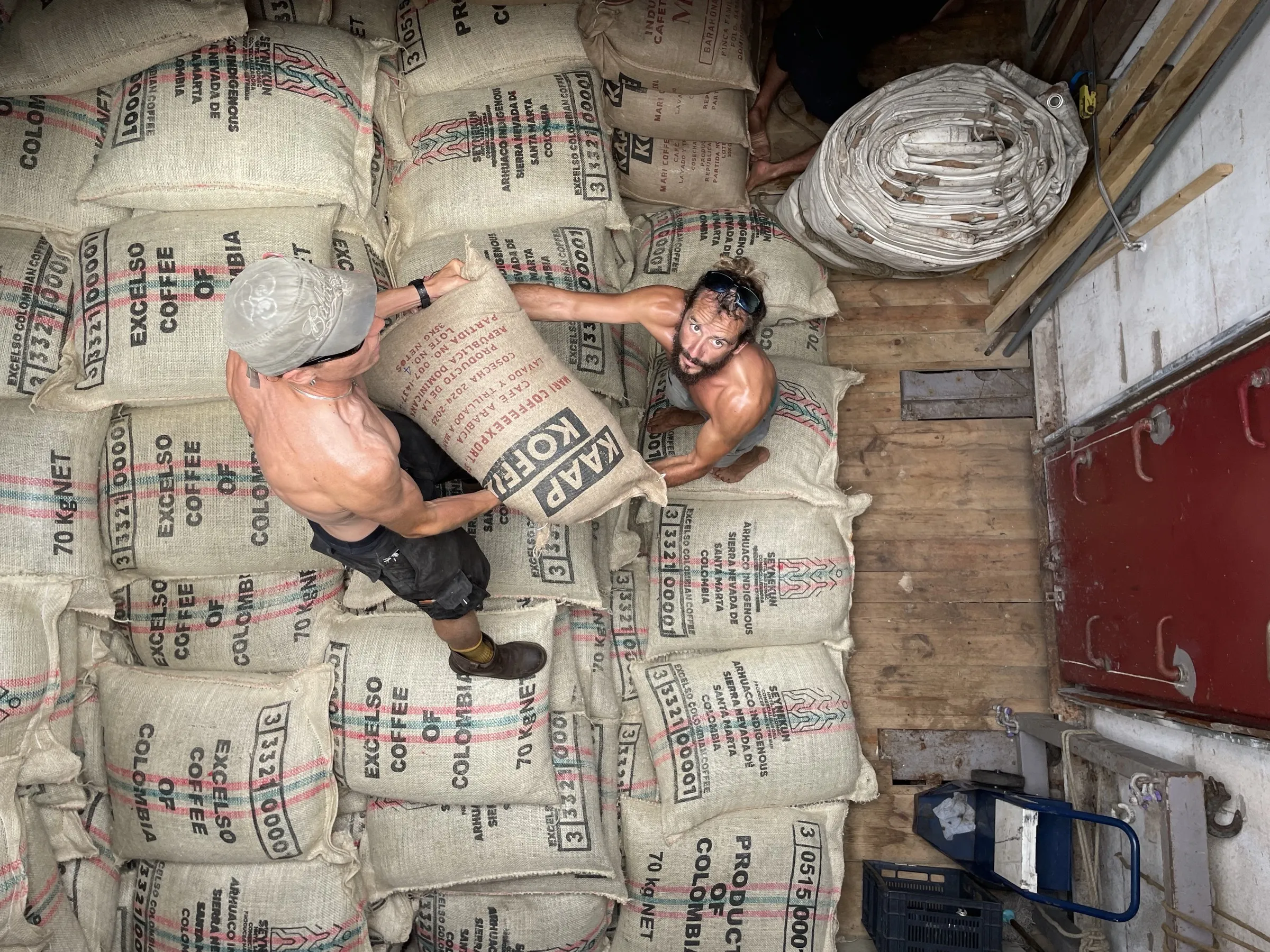
These four are examples, not a limit. Dry goods that keep, and that gain from the story of how they travelled, are at home in our hold, and shippers regularly come to us with something we have not carried before. Everything is loaded and stowed by hand, the way cargo has always been carried under sail. Tell us what you move and we will tell you whether it fits.
Wind is the engine, and we plan around it.
The ocean leg is usually the part of a supply chain that shows the least and weighs the most. Under sail it becomes the part you can put on the packaging and stand behind, because the power that moved your cargo is the same power that moved every cargo before oil.
That does not mean we sail on hope. Ide Min carries modern navigation and weather routing equipment, and the crew use it to work with the weather systems rather than against them: picking up the trade winds where they run reliably, and routing around heavy weather rather than through it. You get a voyage window agreed in advance, and a ship that is planned to it.
The Atlantic round
One round a year, sailed in this order: Amsterdam, Porto Santo off Madeira, Boca Chica in the Dominican Republic, Santa Marta in Colombia, and home by way of Horta in the Azores. The outbound leg is drawn solid and the return dashed. Both bow away from the straight line for a reason: south on the way out to pick up the trade winds, north on the way home for the westerlies.
The practical side
The Shipped under Sail badge
Shipping with us licenses the badge for the products on board. With every voyage you receive:
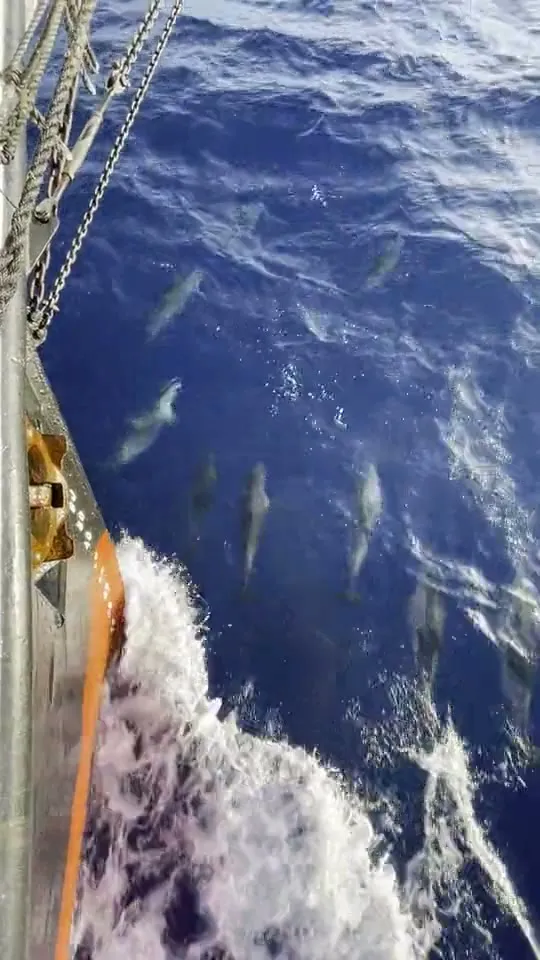
Footage you can actually use.
Dolphins running with the bow, filmed from Ide Min's rail. Every voyage throws up material like this, and it comes back with your cargo, ready to post.
Cargo, loading and life aboard
Questions shippers ask
How much can you take?
+
Up to 55 tons per crossing, and the hold is shared between several shippers. Tell us your volume and we will tell you what still fits in the coming voyage.
How long does it take?
+
Between 3 weeks and 5 months, depending on the route and the weather. You get a window rather than a delivery date, and word from the ship along the way.
How often do you sail?
+
One Atlantic round a year at present. Space is booked well ahead, so the earlier you talk to us, the more likely we can fit your harvest into the voyage you want. In the months Ide Min is back from the Atlantic she sails within Europe as well, so shorter runs between European ports are possible outside the crossing season.
Is my cargo insured?
+
Yes. Ship, crew and cargo are covered by full P&I insurance for the duration of the voyage.
What does it cost?
+
More than a container slot. We would rather quote you honestly than publish a number that fits nobody, so tell us the product, the volume and the ports and you get a real price.
How do you plan around the weather?
+
Ide Min carries modern navigation and weather routing equipment, and the crew use it to make the most of the systems rather than fight them: picking up the trade winds where they run reliably, and steering around heavy weather rather than through it. You get a voyage window agreed in advance and word from the ship along the way. We ask for the same flexibility any ocean carrier asks for, but the passage is planned and we sail to that plan.
Ready to put your cargo under sail?
Tell us what you ship and where, and we will map it to a voyage.
Talk to us