For most of history, this is simply how cargo crossed.
Every ocean trade route on earth was opened under sail. Then, in a couple of generations, the engine took it all, and the craft of carrying freight by wind came within a hair of being lost entirely. Kaap Kargo started with one small ship and the question of whether it still had a future.
LUN II
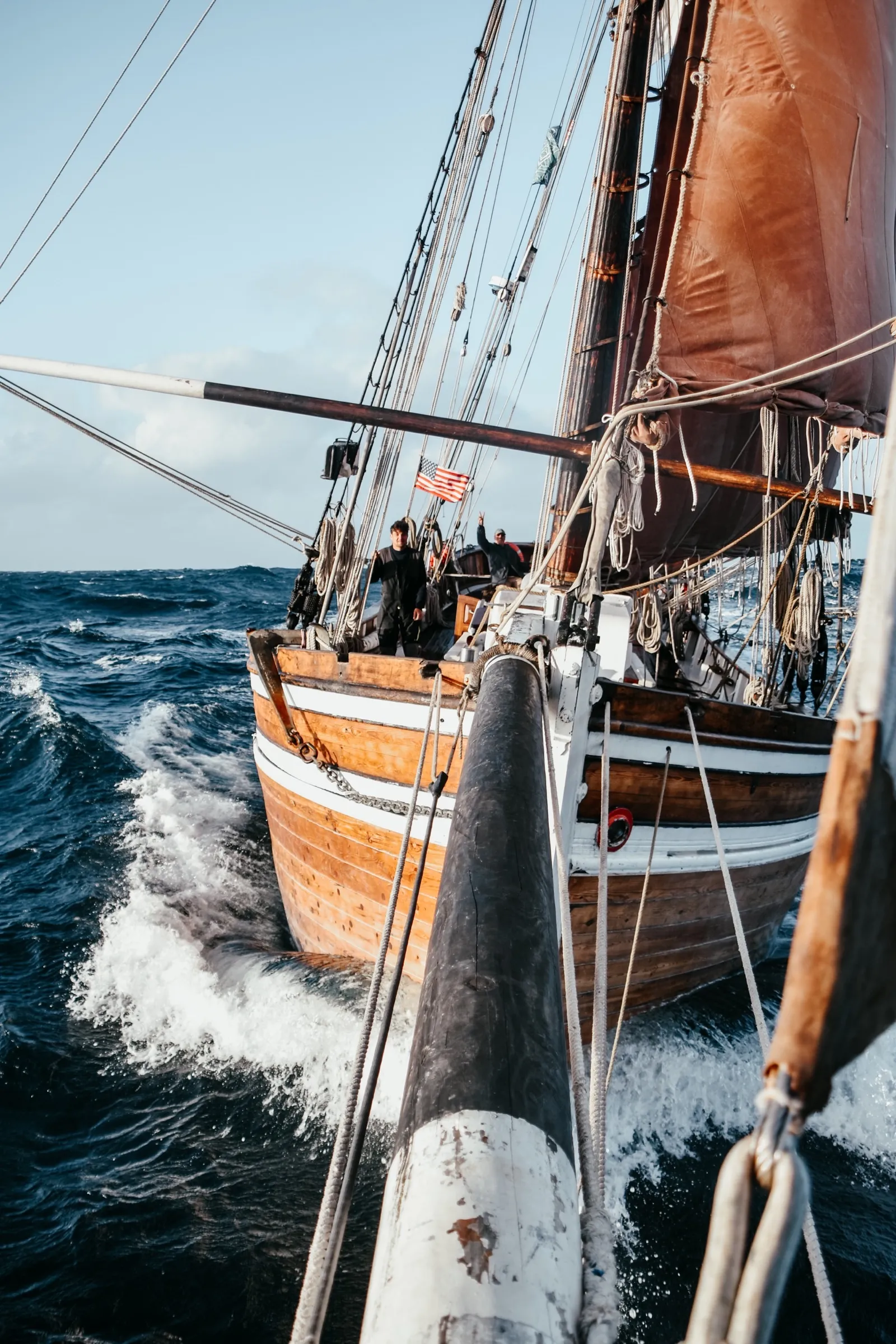
Kaap Kargo started with a single voyage aboard LUN II, a small traditional sailing vessel, and a conviction that ran ahead of the evidence: that goods could be carried across the Atlantic under sail, commercially, today, not as a demonstration but as a service somebody would actually buy.
There was no fleet, no terminal, no schedule to speak of. There was one ship, a crew willing to sail her, and cargo that had to reach the other side of an ocean. Everything the company does now was decided on that basis: the sea first, the business built around it.
South America, under sail
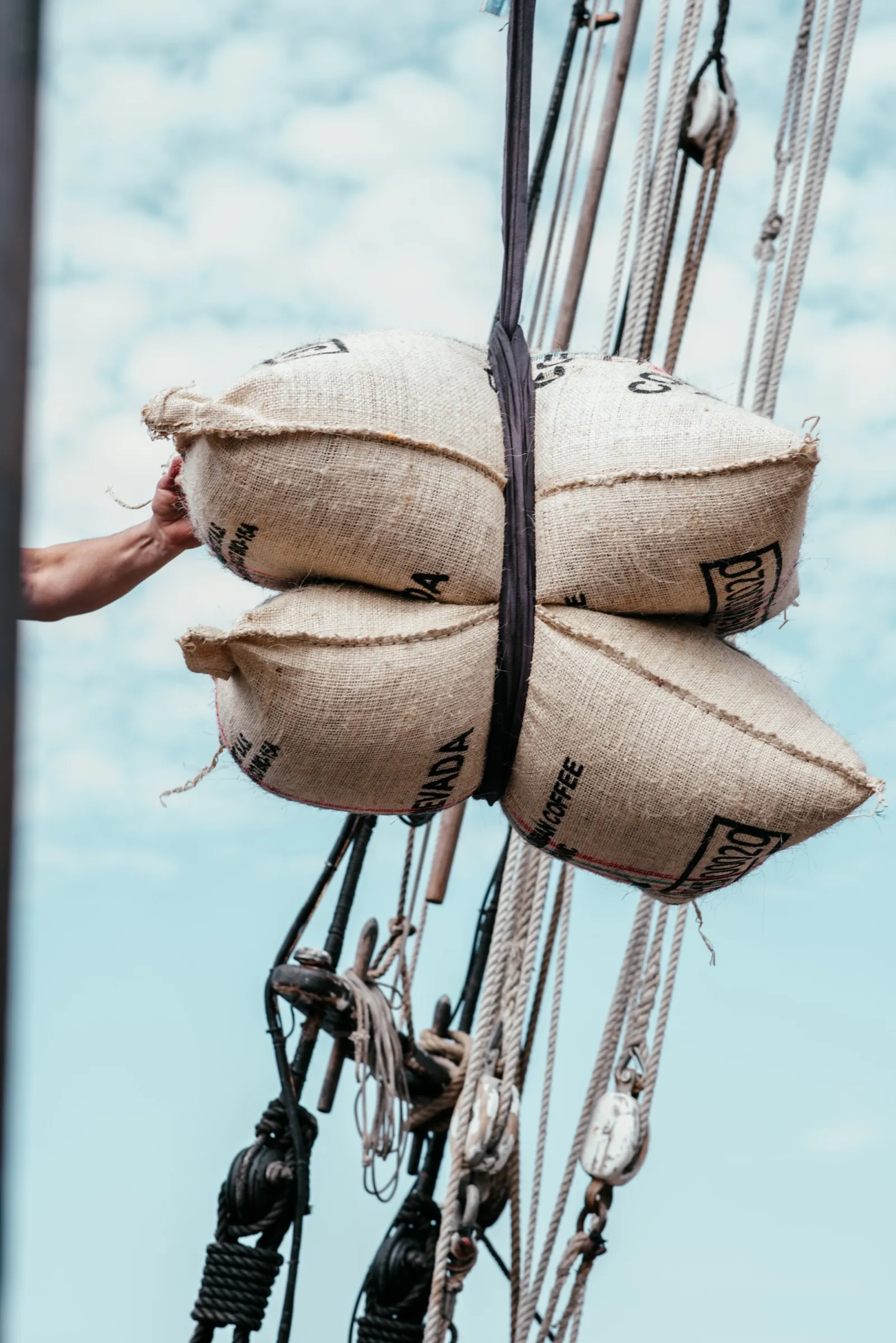
That one voyage took LUN II to South America and back, down the old trade-wind road, the same one every sailing ship took west for four hundred years. It answered the question the whole idea rested on: the crossing could be sailed, the cargo arrived, and there were producers and buyers on both ends who wanted their goods moved this way.
It also showed the limit. A voyage that long, worked that hard, only pays if there is enough cargo in the hold to justify it, and LUN II could carry only a fraction of what a working freight run needs.
Ide Min takes over
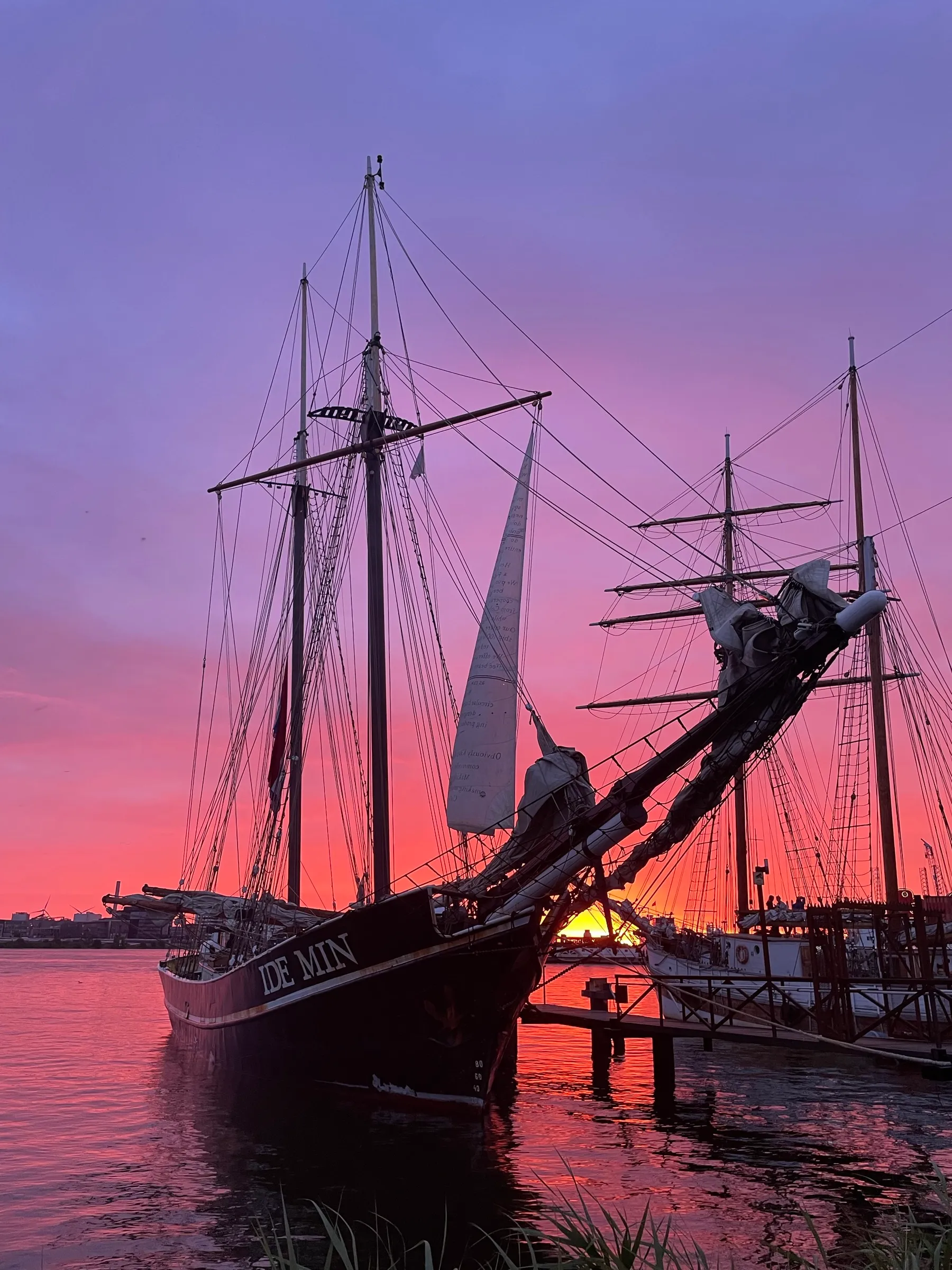
Ide Min was the answer to that limit. A 1957 steel hull with a working life behind her, built as an East German tugboat and renovated in Poland in 1993 as a sailing charter ship, she was rebuilt in Amsterdam by Woodies Shipbuilding into a sailing cargo vessel with a hold for 55 tons.
She took over from LUN II because she could carry what LUN II could not: enough cargo for a crossing to make sense for a shipper as well as for us. She is a ship with a history, and she is writing a new chapter as our working ship on the Atlantic ever since.
The short version
Photography from the early voyages: Lois Notebaart.
Why a working ship, and not a museum
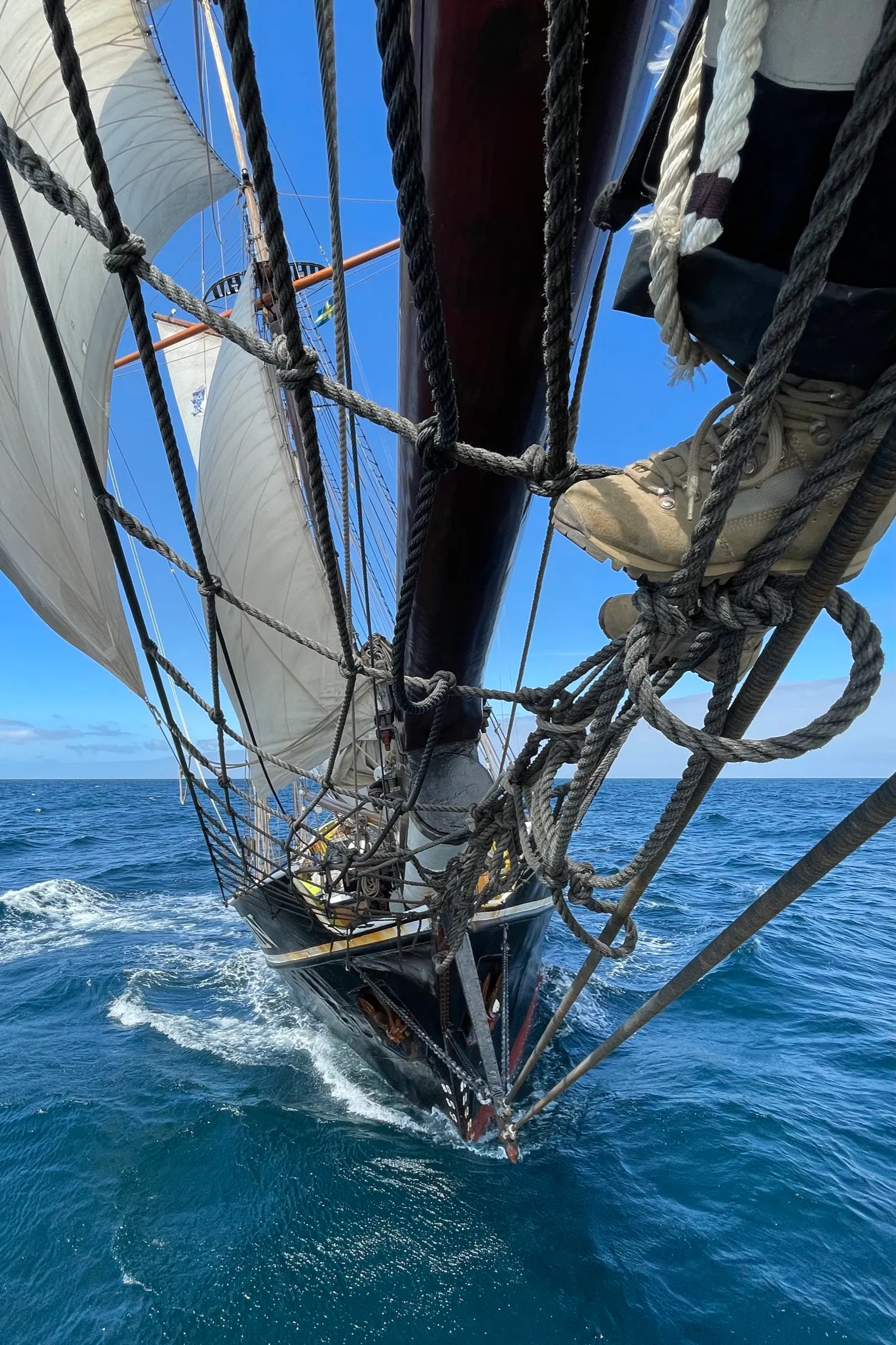
There are beautiful sailing ships kept in harbours all over Europe, varnished and admired and going nowhere. That is one way to preserve a craft, and it is not ours. Rigging, celestial navigation, traditional cargo stowage, standing a night watch in weather. These are skills that only stay alive in the hands of people using them to get somewhere, with something in the hold that has to arrive.
So Ide Min works for her living. Every crossing she makes is a season of seamanship passed from experienced sailors to the shipmates aboard, and the reason the trade has a next generation at all. Freight is what pays for it; the craft is what it keeps.
Where this is going
One ship and one crossing a year is a beginning, not the plan. Growing our fleet, expanding our routes, testing larger ships, strengthening industry and green partnerships, supporting research at sea, and giving local youth real opportunities aboard.
This is how we shape the future of sustainable shipping: one working voyage at a time, with more hold, more routes and more hands to sail them.
The next chapter needs cargo.
If you have goods to move across the Atlantic, we have a hold and a season.
Talk to us